Dependable Sarnia Tree Services
You require Parkhill arborists familiar with Sarnia's unique climate conditions, soil composition, and utility requirements. We adhere to ISA A300/ANSI Z133, industry-standard traffic management, and utilize precision testing equipment (resistograph, moisture, thermal) to inspect, maintain, or carefully remove trees with insulated lifts and rated rigging. Rely on quantified prescriptions, protected work areas, and machinery setup that ensures the safety of structures and pedestrians. Ready for emergency response 24/7 with GPS-tracked crews, we maintain records of visual documentation, risk evaluations, and treatment programs. Continue reading to learn our methods for protecting your property.
Key Takeaways
- Local Sarnia specialists managing challenging weather and soil conditions, while considering utility setbacks and drainage constraints for reliable and code-compliant tree care.
- ISA-compliant assessments featuring resistograph testing, soil testing, and risk analysis matrices to diagnose and assess problems and develop customized care plans.
- Specialized pruning and canopy care that preserves natural form, limits canopy thinning to twenty to twenty-five percent, and strengthens weather resistance.
- 24/7 emergency response with GPS-tracked teams, featuring insulated equipment, careful tree extraction, complete stump grinding, and comprehensive site cleanup.
- We maintain comprehensive insurance and comply with CSA/ANSI standards, employing properly certified machinery, detailed safety procedures, and transparent documentation for both homeowners and insurance providers.
The Value of Local Tree Experts for Sarnia Properties
Because trees respond to microclimate and site conditions, professional arborists provide the regional knowledge Sarnia residences demand for reliable, research-backed service. You gain practitioners who know about coastal wind patterns, clay‑rich soils, drainage limitations, and utility setbacks common to your streets. They calibrate trimming schedules, equipment setup, and chipper placement to prevent damage to structures, pedestrians, and services.
Regional knowledge also enhances compliance. Professional tree specialists match their guidance with municipal bylaws, infrastructure clearance guidelines, and animal habitat safeguards. Through community engagement, they distribute safety notification procedures and manage area-specific preventive actions after storms. Their climate-specific expertise help you prepare for winter damage risks, pest infestations, and water deficiency issues, so you can schedule interventions before issues worsen. You obtain targeted, justified solutions that preserve tree health and site safety.
Expert Tree Health Analysis and Treatment
We initiate our approach with a systematic tree health assessment that unifies visual inspection, diagnostic tools, and site data. We record species identification, age assessment, exposure conditions, and soil analysis, then perform root collar inspections to identify root girdling, deterioration, and elevation variations. Utilizing chlorophyll fluorescence analysis, resistograph measurements, and moisture monitoring, we quantify physiological and structural concerns.
We provide seasonal tree assessments customized for Sarnia's climate: spring growth and tissue evaluations, summer foliar analysis, fall root health monitoring, and winter bark and disease surveys. We analyze soil for acidity, salt content, density, and pathogen presence, and map problem areas based on ISA best management practices. Our maintenance plans specify optimal root zone aeration, mulching depth, irrigation timing, PHC applications, and stem preservation methods to decrease structural risks and improve long-term survival.
Advanced Pruning and Canopy Maintenance
Optimize tree stability and security with pruning techniques that focus on biological principles and load distribution, rather than mere aesthetics. You'll decrease structural weaknesses by pruning at the collar junction, protecting natural barriers and nutrient transport. Begin with a detailed tree inspection: identify co-dominant stems, over-extended branches, and asymmetric growth patterns. Utilize crown balancing techniques to balance forces, minimizing twisting forces during wind events. Use targeted thinning-avoiding extreme interior stripping-to protect inner canopy, boost airflow, and decrease wind load without causing reactive growth.
Define measurable limits: cut back no more than twenty to twenty-five percent of live foliage per growing period, maintain at least 1/3 branch diameter at unions, and establish clearance specifications around infrastructure and utilities. Focus on deceased branches, interfering limbs, and unhealthy tissue. Track growth patterns and schedule maintenance on a 3-5 year cycle to sustain proper structure, light penetration, and weather resilience.
Expert and Dependable Tree Elimination Operations
When structural issues, disease, or clearance problems can't be fixed through pruning, removal is the safest option. We implement a comprehensive strategy, including location assessment, equipment setup strategy, and controlled cutting techniques to protect surrounding property. Certified specialists carefully dismantle trees piece by piece, utilizing professional-grade equipment, mechanical brake systems, and guide lines to control falling sections. We conduct thorough utility checks, establish safety zones, and adhere to ANSI Z133 and ISA BMPs to ensure maximum safety.
Extracting stumps and roots concludes the process, eliminating sucker growth and conflicts with utilities or foundations. We use grinding equipment sized to access tight sites, and we restore using suitable fill to ensure proper elevation. Materials are recycled when practical, and we ensure the area is tidy and suitable for future landscaping.
Emergency Storm Response and Risk Management
When extreme weather strikes Sarnia, you need quick emergency mobilization that sends out professional personnel, insulated equipment, and traffic management systems promptly to manage impacted locations. You should expect hazard assessment protocols that adhere to ISA and ANSI A300 standards: structural root and canopy inspections, load path analysis, and utility line assessments. With these systematic approaches, we minimize remaining dangers, identify urgent tree work, and secure area accessibility.
Emergency Storm Deployment
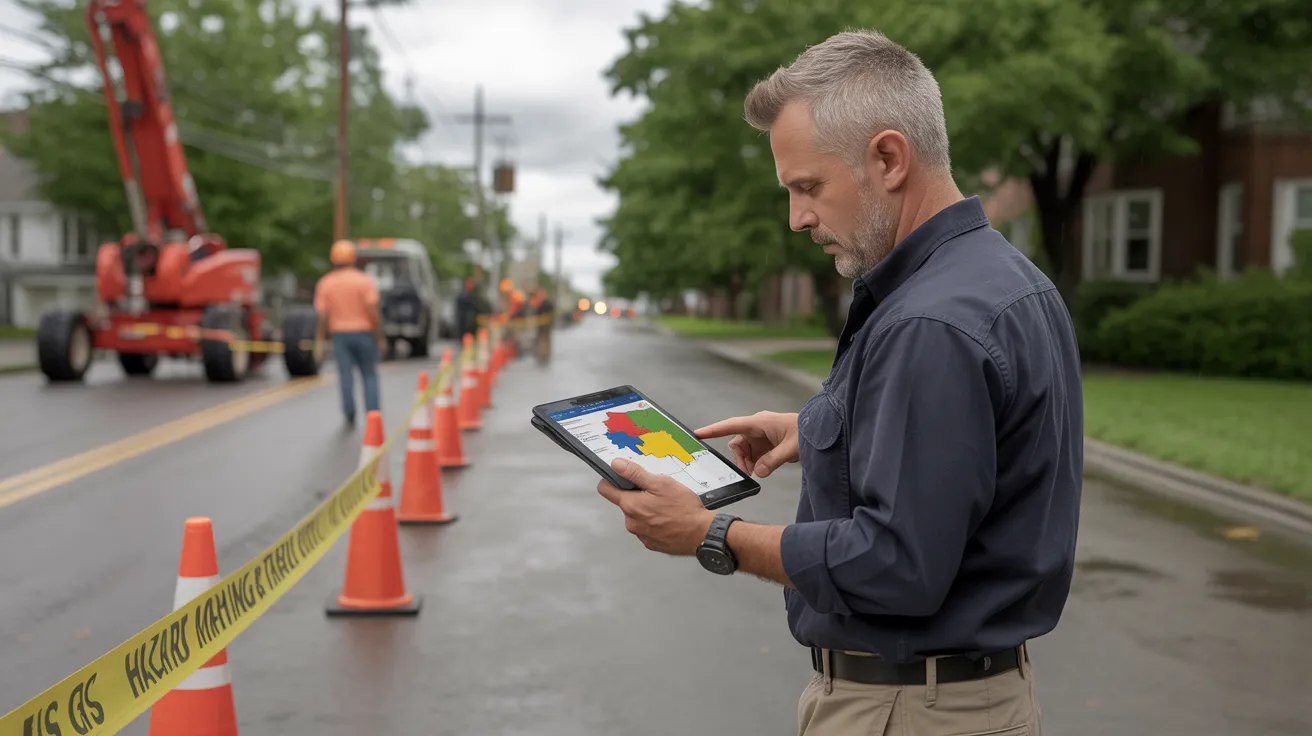
When severe weather strikes, Parkhill Tree Service quickly mobilizes to secure damaged sites, eliminate safety threats, and clear pathways across Sarnia. Customers benefit from rapid response managed via a 24/7 dispatch, GPS-tracked fleet, and ready-to-deploy equipment. Teams arrive with essential equipment including insulated saws, rigging gear, traffic control kits, and chipper/loader units to restore critical access and protect utilities.
You receive support from coordinated community response with emergency responders, utilities, and public works to address blocked arterials, downed conductors, and compromised trees affecting structures. Crews follow ICS-style roles, create secure work areas, and adhere to ANSI Z133 and provincial guidelines. They perform controlled dismantles, crane-assisted removal of large windfall, and waste segregation for streamlined hauling. Records comprise dated visual evidence, debris tracking documentation, and detailed reports to assist with municipal documentation and insurance processing.
Safety Assessment Procedures
Even though workers respond swiftly, they won't proceed until a structured hazard assessment verifies the area is secure and objectives are defined. You'll observe a systematic sweep: create exclusion zones, check utility status, and stabilize traffic patterns. Workers perform risk mapping to identify tensioned limbs, damaged stems, root-plate failures, and secondary strike hazards.
They employ specialized rangefinders, clinometers, and thermal imagers to detect energized conductors and hidden stress. Stress patterns are evaluated to determine potential breakdown points. Branch classification systematically identifies components by hazard category, aligning removal techniques to danger ratings: specialized rigging, machine-assisted removal, or precise felling. You'll be provided comprehensive reports, featuring visual evidence, risk ratings, and mitigation strategies. This protocol reduces accident potential, avoids cascade failures, and reestablishes access with verifiable safety standards.
Stump Grinding and Site Restoration
Revitalizing your property starts with precise stump grinding that eliminates trip hazards, stops regrowth, and readies the site for fresh landscaping. We adjust grinder depth to 6-12 inches below grade, matching tree species characteristics and site loads. You receive clean chip containment, protected work areas, and validated utility identification prior to cutting.
After grinding is complete, we implement precise root removal to prevent lateral sucker formation and address surface heave risks. We segregate chips from mineral soil to avoid nitrogen drawdown, then restore with a graded aggregate-soil blend that promotes compaction and soil stabilization. Final grading achieves positive drainage and uniform subgrade tolerances. If you are considering hardscapes or replanting, we provide detailed soil analysis and structural capacity guidance so the rehabilitated footprint maintains stability and safety over time.
Strategies for Disease, Pest, and Soil Management
Since tree health depends on prompt identification and controlled treatments, we incorporate assessment protocols, action points, and remedial steps into an integrated care strategy. We initiate with detailed examinations, utilizing fungal diagnostics, pheromone monitoring, and canopy analysis to confirm infections and pest pressure. You obtain defined treatment levels that indicate when intervention is needed, avoiding unwarranted treatments.
We start by resolving soil limitations. We evaluate essential soil metrics like pH, EC, CEC, and organic matter, then implement targeted amendments and tested soil inoculants to improve root symbiosis and nutrient uptake. For pest and disease management, we implement precise pruning, sanitation, and labeled chemistries under comprehensive pest control strategies. We coordinate applications based on life cycles, protect beneficial organisms, and record effectiveness. You get thorough monitoring documentation, periodic review schedules, and updates based on measurable plant reactions and environmental conditions.
Equipment, Safety Standards, and Insurance Coverage
Ensure the crew utilizes industry-standard arborist equipment including safety ropes, rope protection, precision saws, and certified rigging equipment. Ask for written safety protocols that comply with ANSI Z133 and CSA/OHS standards, addressing protective gear, emergency response and thorough job hazard analyses. Verify comprehensive liability and WSIB/worker's compensation protection, and secure certificates naming you as an additional insured before operations commence.
Top-Quality Tree Care Equipment
Rely on Parkhill Tree Service to employ professional-grade arborist equipment optimized for optimal performance. You can rely on high reach aerial lifts with protected boom systems, non-marking outriggers, and load monitoring to prevent overcapacity events. Crews use GPS guided fleet tracking to arrange equipment efficiently and decrease idle time on-site. Chain saws feature inertia-activated chain brakes and low-kickback bars, while lifting equipment carries traceable ratings that correspond to calculated forces. Equipment is serviced to OEM specs; chipper performance is verified through knife clearance checks, component positioning, and feed-roller torque tests. Stump grinders run guarding and emergency stops verified per CSA standards. Parkhill holds active liability and WSIB coverage, and records pre-job inspections, maintenance intervals, and calibration reports to ensure safety standards and protect your property.
Advanced Safety Standards
Routinely, Parkhill Tree Service executes a documented safety program that integrates technical safeguards, validated tools, and validated liability coverage. You gain through a well-established safety culture that establishes job hazard analyses, team safety meetings, and task allocations. Crews deploy safety gear matched to specific work dangers, maintain lockout tagout for operational machinery, and place worksite signage to control public and traffic interfaces. Supervisors maintain incident reporting and near miss tracking to enable corrective actions and quantifiable safety improvements. You'll observe verified instruments, standard-meeting equipment, and safety compliance reviews logged before mobilization. Field teams adhere to provincial and ANSI/ISA standards, with continuous training on fall prevention, aerial rescue, and electrical proximity. Documentation is audit-ready, time-stamped, and verified at each phase.
Comprehensive Liability Insurance
While each job comes with its own unique risk profile, Parkhill Tree Service supports all operations with all-encompassing liability insurance that aligns perfectly with its engineered safety controls and certified equipment. You get protection that reflects actual field hazards-including rigging loads, aerial lift operations, chipper exposure, and traffic control interfaces. We define precise policy limits for property loss, physical injury, and completed work, corresponding to risk assessments performed before project mobilization.
Our coverage enhances CSA-compliant PPE, annual equipment inspections, and operator certifications, addressing areas that self-insurance fails to protect. You'll receive certificates of insurance when needed, specifying endorsements, additional insured status, and waiver of subrogation where necessary. If an incident occurs, our efficient claims process records accountability sequence, timestamps, and accident causes, accelerating resolution while maintaining your project deadlines and financial planning.
Straightforward Quotes, Scheduling, and Service Plans
To minimize uncertainties and risks, Parkhill Tree Service offers detailed, itemized estimates that specify work scope, techniques, machinery, waste removal, traffic provisions, and required permits before commencing operations. You get detailed price information based on specific parameters-DBH, canopy spread, access constraints, and utility proximity-so you can compare options and click here understand cost drivers. We detail ANSI A300 practices, PPE, and exclusion zones in your project documentation.
You'll receive a scheduled service window, prior service updates, and backup arrangements for adverse weather conditions or utility complications. Technicians show up with calibrated gear and Job Safety Analyses completed. After completion, you'll receive a service summary with images and professional advice. To sustain tree health and minimize potential problems, we provide regular care programs with regular evaluations, pruning cycles, pest monitoring, ground maintenance, and financial projections.
Questions & Answers
Do You Offer Eco-Friendly Disposal or Wood Recycling Options for Removed Trees?
Yes, we offer environmentally conscious disposal and wood repurposing solutions. We carefully divide woody materials and debris for recycling: processing into lumber, mulch production, or biomass fuel. Where feasible, we position specific logs or brush collections for wildlife habitat, following municipal guidelines and invasive-species protocols. We sanitize our tools to prevent pathogen spread and furnish comprehensive documentation. We'll provide clear disposal plans, load weights, and site safety measures aligned with industry standards and best practices.
Is It Possible to Keep the Wood Chips or Logs for My Own Use?
Without a doubt, you can store wood chips and logs. The impact is significant in terms of sustainability. Use chips as yard mulch; they stabilize soil temperature, suppress weeds, and preserve moisture. Keep chips composting 3-6 months to eliminate nitrogen drawdown. For logs, follow safe firewood storage: split them for faster seasoning, elevate the stack, cover just the top, ensure 15-20% moisture (use a meter), and keep piles 6-10 feet from structures to decrease pest and fire risk.
Can You Tell Me About Your Seasonal Discounts and Referral Programs?
Yes. You'll usually find seasonal discounts during off-peak seasons (late winter or mid-summer) for pruning, removals, and stump grinding. Ask for written conditions, eligible services, and restricted periods to ensure safety-critical tasks receive appropriate attention. Many companies also offer referral incentives-typically a percentage off or set dollar amount-after the new client completes and pays for service. Confirm limits per household, compatibility with other promotions, and expiration dates. Document quotes and discounts on the final invoice.
Do You Offer Support for Municipal Permits and Bylaw Compliance Paperwork?
We offer comprehensive bylaw and permit support from initial contact to project completion. We take care of determining necessary municipal requirements, handling paperwork, obtaining arborist reports, and submitting all applications. We coordinate necessary inspections, utility locates, and traffic management plans where necessary. You get detailed risk assessments, site maps, and pruning/removal documentation conforming to ISA and ANSI A300 standards. We manage authorization progress, keep compliance documentation, and schedule work strictly following permit approval to guarantee regulatory compliance and safety.
What Guarantees or Warranties Come With Your Services?
You receive a comprehensive service guarantee and a defined workmanship warranty on all completed tasks. We clearly detail warranty conditions in writing, including coverage period, exceptions, and resolution procedures. If defects arise from our workmanship within the warranty period, we return promptly, evaluate concerns, and remediate to standard at no cost. We provide post-service documentation, photos, and compliance notes to verify outcomes. Notify us of concerns within stated timelines so our team can examine, address concerns, and fulfill warranty obligations quickly.
Key Takeaways
You could gamble with unprofessional equipment and speculation, or you could trust Parkhill's certified arborists and depend on established guidelines tackle the challenging tasks. You'll benefit from detailed risk assessments, industry-compliant pruning, calibrated stump grinding, and protected removals that won't damage your property. In emergency situations, you're guaranteed quick response times, detailed work plans, and proven soil remediation. To be direct, you're securing more than basic tree care - you're investing in safety, compliance, and consistent outcomes.